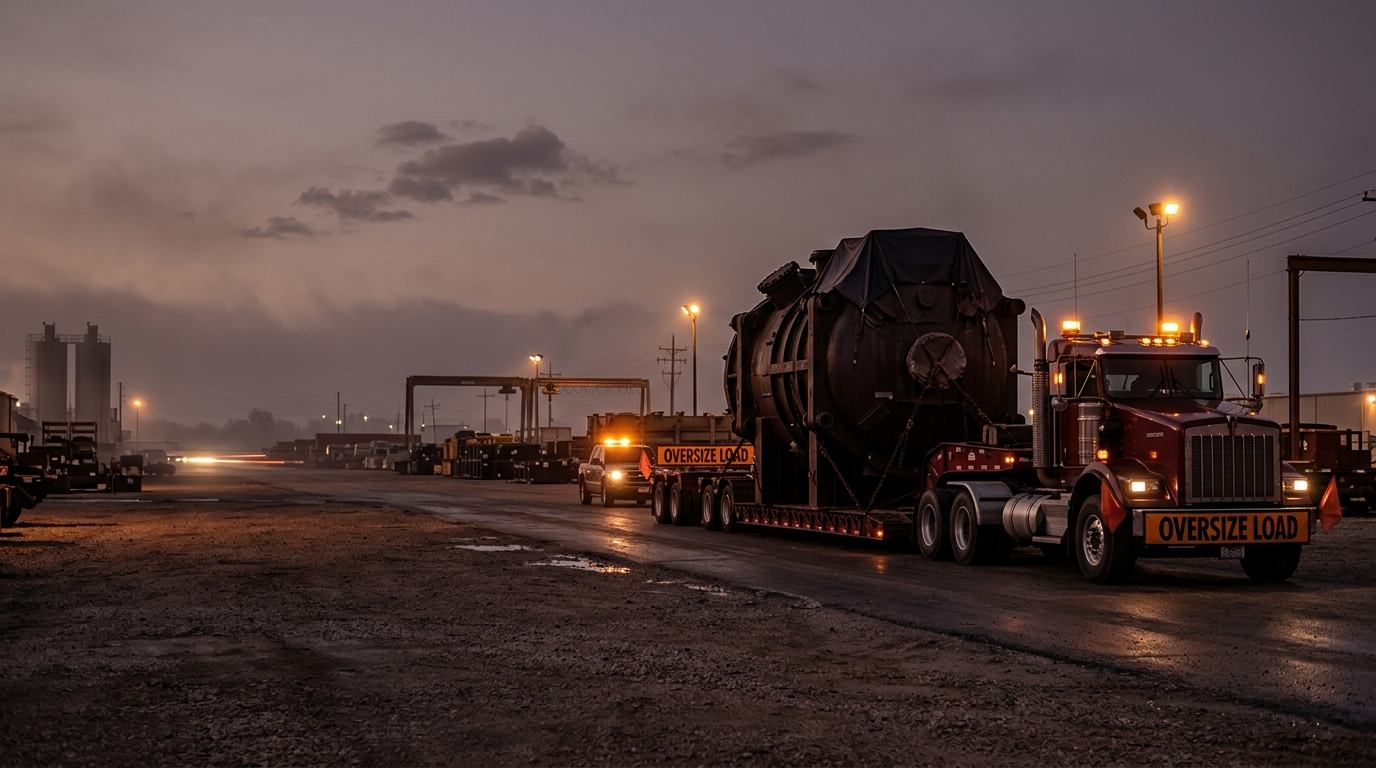
Why specialized freight outgrows standard systems
A van load is a van load. A specialized load is a set of dimensions, an axle configuration, a trailer type, a permit for every state on the route, possibly escorts and a route survey, and travel restrictions that decide when the truck can move. Standard trucking software handles the first part well and leaves the rest to spreadsheets, email and experience.
- Quoting. Each quote depends on length, width, height, weight, trailer type (RGN, lowboy, step deck, stretch or multi-axle) and the route. Quotes are built in spreadsheets, so the assumptions behind the price aren't recorded and actual cost is never compared to the quote.
- Permits. Oversize and overweight permits are ordered state by state, with different rules, costs and lead times. Permit status and cost are tracked outside the system, and permits that change mid-move create gaps.
- Escorts and pilot cars. Escort requirements vary by dimension and jurisdiction. Booking, tracking and paying escort providers is a separate manual process.
- Routing. Bridge weights, clearances, construction and curfews shape the route. Approved routes are documented in permit paperwork, not in dispatch, so drivers and dispatchers work from different information.
- Equipment-specific dispatch. The right trailer and the right driver for the load matter more than the nearest truck. Trailer configurations, certifications and availability are tracked in someone's head.
- Pass-through billing. Permit, escort, route survey, and loading or rigging costs have to be billed back accurately. When they're tracked outside the system, they're easy to under-bill.
- Project freight. Multi-load projects need costs, documents and progress tracked across every load, not one load at a time.
How Strong Tower practices apply to specialized freight
Requirements that respect the work
Specialized workflows are where generic software falls short, so the first step is knowing exactly what you need. Business Analysis documents your quote, permit, escort, routing, dispatch and billing workflow, what your system handles today, and where the real gaps are.
Quote-to-invoice process design
Business Process Optimization connects the quote to the load, the permits and escorts to the load cost, and the load cost to the invoice, so every pass-through charge is billed and every quote can be checked against actual cost.
Quoted versus actual cost
SQL Data Mining & Analytics compares quoted price and assumed cost with actual permit, escort, fuel and driver cost by load, trailer type and lane, so your next quote is built on history instead of memory. Reporting & Business Documents delivers the project, cost and settlement reports you need.
Choosing and implementing the right tools
If your system can't be configured to fit specialized work, TMS Selection & Advisory runs a vendor-neutral selection against your actual workflow, and Project & Program Management manages the rollout so dispatch keeps moving during the change.
Documenting what your people know
Much of a specialized carrier's value lives in the experience of estimators, permit coordinators and senior dispatchers. We capture their rules of thumb, equipment knowledge and approved routes in the system and in written procedures, and Training & Enablement brings newer staff up to speed on the same process.
Independent by design
Strong Tower Consulting never requires you to buy our software. Our sister company, Exspeedite, builds a TMS, and that's exactly why we know what's under the hood of yours. We work with the systems you run today. If staying put is the right answer, we'll say so. If another product fits better, we'll say that too.
What an engagement looks like
Every Strong Tower engagement follows the same arc: Analyze, Streamline, Deliver, Sustain (see How We Work). What changes by segment is where we look first and which numbers we put in front of you. For a specialized or heavy haul carrier, a typical engagement runs like this:
- Discovery. We sit with sales and quoting, permitting, dispatch, billing and settlements, and follow several recent loads from quote to invoice. Then we review how your systems and spreadsheets handle each step.
- Findings. A written assessment ranks issues by dollars and risk: under-billed pass-through charges, quote accuracy, rekeying hours and missing documentation.
- Plan. Scope, owners and schedule, with billing and cost capture first.
- Execute. Process changes, configuration, reports and training, or a managed selection and implementation where warranted.
- Sustain. KPIs such as quoted versus actual margin, pass-through capture and days to invoice, tracked on a set cadence.
Most carriers start with a fixed-scope Technology Assessment.
Signs it's time to bring in help
It's usually time to call when the business has outgrown the spreadsheets and the experience of a few key people. Common triggers:
- Quotes are built in spreadsheets and nobody compares them to actual cost after the load delivers.
- Permit and escort costs are sometimes left off the invoice.
- Approved routes live in permit paperwork, not in dispatch.
- Trailer configurations and driver certifications are tracked in someone's head.
- A key estimator or permit coordinator is retiring and their knowledge isn't documented.
Capturing that knowledge in your systems protects margin today and protects the business when people move on.
Frequently asked questions
Can a standard TMS handle oversize and overweight freight?
Partly. Most systems handle orders, dispatch and billing well but need careful configuration for dimensions, permits, escorts and pass-through charges. We document what yours can do and recommend changes only where the gaps are real.
Can you help us stop under-billing permits and escorts?
Yes. We connect permit, escort and route survey costs to the load in your system and set billing rules so every pass-through charge reaches the invoice.
Can you compare our quotes to actual cost?
Yes. We pull quoted prices and actual costs from your systems and spreadsheets and report margin by load, trailer type and lane, so future quotes reflect what loads really cost.
Is Strong Tower Consulting independent of software vendors?
Yes. Strong Tower Consulting is independent. Our consulting never requires buying our sister company's software, and we work with the systems you run today.